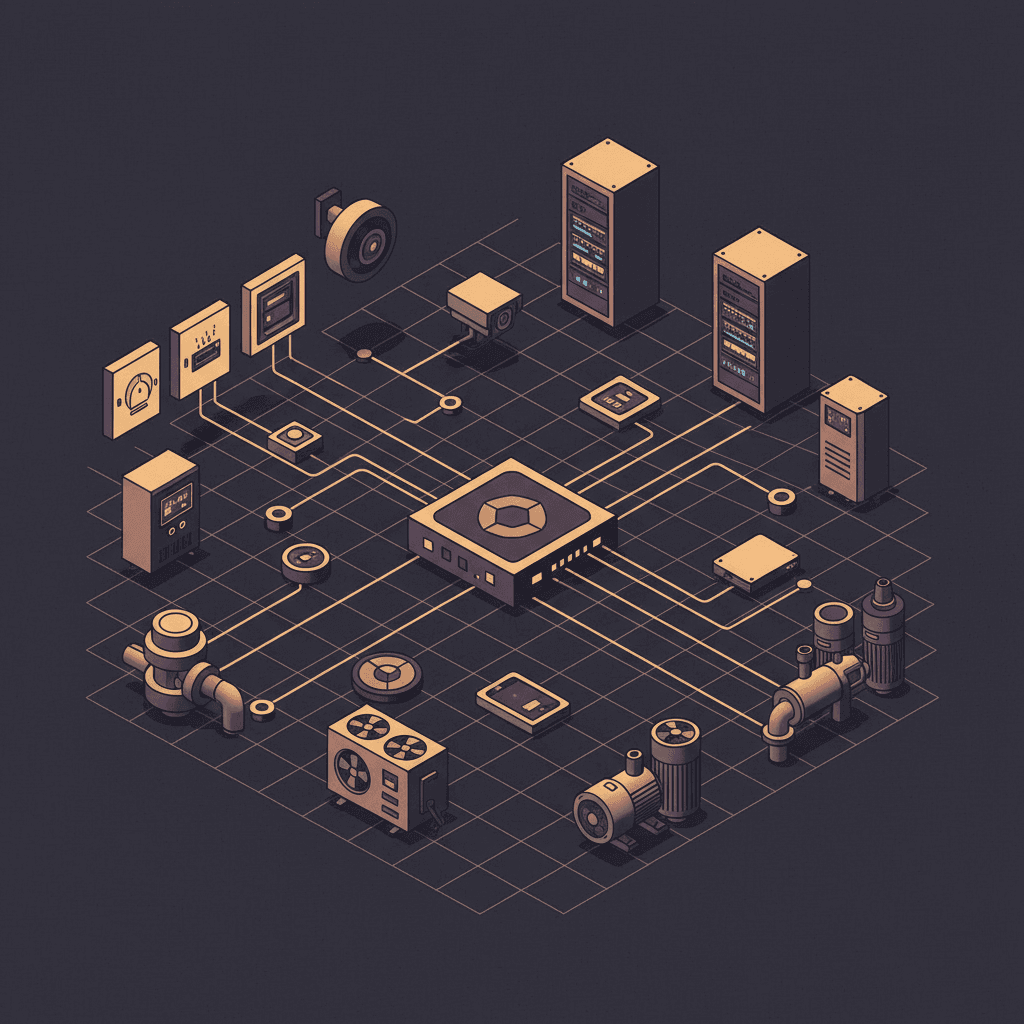
How to remotely monitor HVAC across many stores and sites with the equipment you already have
To remotely monitor HVAC across multiple store locations and sites, you don't need to replace equipment or the BMS: the HVAC units, chillers, air handlers and controllers already installed connect to a platform that shows temperatures, states and consumption for every site in one place and alerts when a unit goes out of range. At GSS Analytix this is done by physical or virtual Phantom Shield gateways and the Reveal platform, as a monitoring layer on top of what each site already runs. This guide covers what is monitored, how it works, when you don't need it and where it is already in use.
What is monitored in each site's HVAC
- Temperature of the spaces that matter at each site (sales floors, kitchens, offices, shelters and technical rooms), compared against the range defined for each one
- Humidity where it is critical, such as server racks, laboratories or warehouses, with periodic readings and a history to spot trends
- Status of every HVAC unit, chiller or air handler, read from the unit itself or from the site's BMS, with an alert when it goes out of range
- Energy consumption of the site and its equipment, from the meters already installed, to compare sites and find the ones that drift from normal
- Schedule compliance: differences between the defined on/off program and the actual state of the connected equipment
- Climate control failures in shelters and closed rooms, where an HVAC shutdown can raise the temperature to critical levels within minutes
- Events that arrive together: a temperature spike, an electrical anomaly and a UPS event at the same site, read as one story
Which variables are read depends on what each unit, controller or BMS already exposes over open protocols. Where a unit was never instrumented, temperature or humidity sensors are added only at that point.
How it works: a monitoring layer on top of the installed HVAC
- 1Connect. One Phantom Shield gateway per site, physical or virtual, connects to the HVAC units, chillers, air handlers or BMS already installed, over BACnet, Modbus, SNMP, MQTT or HTTP/REST, without modifying firmware or doing civil works. Where wiring is hard, Modbus-to-LoRaWAN converters carry the readings.
- 2Collect. Readings are stored on the gateway (store and forward): if the internet drops at a site, data syncs on reconnect, without touching the BMS control logic.
- 3Normalize. Reveal maps every signal into a common semantic layer (Brick), so a chiller or an air handler at one site compares with those at another, even when each site has equipment or a BMS from a different brand.
- 4Analyze. Reveal learns each unit's normal behavior, detects the ones that go out of range, compares sites with each other and relates temperature to energy, backup power and access events at each site.
- 5Act. Alerts via WhatsApp, email or ticketing, a time-stamped history for audits and, on equipment that supports it, setpoint and schedule adjustments, with every action logged. The BMS keeps controlling each building.
Many sites and mixed brands, without replacing the BMS
A multisite operation runs HVAC units, controllers and BMS from different brands and generations, each with its own screen, or with no screen at all. Reveal brings their status into one view, regardless of manufacturer: you don't need to standardize brands, replace equipment or change each building's BMS to see HVAC across every site.
Each new site joins the same view, with the same rules and alerts. Supervision moves from rounds and phone calls to management by exception: technicians are dispatched only when Reveal confirms a condition requiring on-site intervention, and management sees which sites are out of range without waiting for a report.
HVAC and energy in the same view
HVAC is usually one of the big loads on a site's energy bill. With the meters already installed, Reveal puts each site's consumption next to the status of its HVAC equipment, compares sites with each other and measures the effect of a setpoint, schedule or equipment change with before-and-after comparisons.
When you don't need it
- You have a single site with a BMS that someone on your team checks and acts on every day
- What you want is local building control (sequences, control loops, fine-tuning each unit's programming): your BMS or controllers keep doing that; this layer supervises, compares and alerts
- What you want is to replace HVAC equipment or renew the BMS: this guide is about supervising what you already have, not replacing it
If you have dozens of sites with units and controllers from different brands, HVAC failures you discover through a complaint, or energy bills you cannot explain by site, that is where centralized supervision replaces rounds and cuts the time equipment runs out of range.
Where it is already in use
Fast-food restaurant operation, Bogotá
5 locations with kitchen equipment, ventilation exhaust fans and electrical consumption in one platform, with scheduled start-up and shutdown executed from Phantom Shield.
Industrial facility with 5 critical zones, Colombia
Temperature, humidity and voltage every 30 minutes in the server rack, production, laboratory, sample room and warehouse, with alerts for out-of-range conditions.
Telecom base stations (Reveal Tower)
HVAC, electrical systems, access control and CCTV at each station connected to Reveal, with alerts for out-of-range shelter temperature or climate control failure.
Related pages
FAQ: remote HVAC monitoring for multiple locations
How do you remotely monitor HVAC for a company with many sites?
By connecting the equipment you already have to one common platform. Phantom Shield connects to each site's HVAC units, chillers, air handlers or BMS, and Reveal shows temperatures, states and consumption for every site in one place. Reveal alerts when a unit goes out of range and can adjust setpoints and schedules on equipment that supports it, without replacing equipment or the BMS.
Does it work for HVAC across multiple retail store locations or branches?
Yes. Each store or branch gets a Phantom Shield gateway, physical or virtual, connected to its HVAC and, if you want, to its power, UPS, alarms, access control and CCTV. Reveal shows every site in one view, compares their temperature and consumption, correlates events with power and climate and keeps time-stamped evidence for audits. At fuel stations, the same gateway that reads the tank gauge console can add the convenience store's temperature and energy.
Do I have to replace my BMS or the equipment controllers?
No. GSS Analytix does not replace the BMS: it is a monitoring layer on top. Phantom Shield reads the BMS, the controllers or standalone equipment over BACnet, Modbus, OPC UA, SNMP, MQTT or HTTP/REST, without changing firmware or doing civil works, and you don't need to standardize brands. The BMS keeps controlling each building as it does today; Reveal adds the multisite view, alerts and evidence.
Which alerts does it send, and how do they arrive?
Reveal sends alerts via WhatsApp, email or ticketing when a temperature goes out of range, a unit goes out of parameters or climate control fails in a shelter or technical room, and keeps every event in a time-stamped history for audits and SLAs. That way, technicians handle the sites with an exception instead of checking all of them by routine.
Can setpoints and schedules be adjusted remotely?
On equipment that supports it, yes: Reveal can adjust setpoints and schedules, and every automatic action is logged; local control stays with the BMS or the controllers. At a restaurant operation with 5 locations, for example, scheduled start-up and shutdown of kitchen equipment and exhaust fans is executed from Phantom Shield. The effect of a setpoint or schedule change is measured with before-and-after comparisons.
What about equipment with no data output, or sites with poor connectivity?
Where a unit was never instrumented, temperature or humidity sensors are added only at that point; where wiring is hard, Modbus-to-LoRaWAN converters carry the readings; and where a device has no data output, existing cameras can read its indicators. If the internet drops, the gateway stores the data and syncs it on reconnect.
How is a multisite HVAC monitoring project sized?
By primary connection: each device, gateway or data source connected through Phantom Shield counts as one. For example, an industrial facility with CCTV, access control, fire detection and thermo-hygrometers in 5 critical zones adds up to 9 primary connections. Tell us how many sites you have and which HVAC equipment or BMS each one runs, and we prepare a proposal.
How many sites and which HVAC equipment do you want to supervise?
Projects are sized by primary connection. Tell us how many sites you have, which HVAC units, chillers, air handlers or BMS each one runs and what you want to see in one view, and we prepare a proposal without replacing what is already installed.