Reveal Kitchen
Industrial Kitchen Process Automation for Energy Cost Reduction and Operational Improvements
Automated and intelligent control of industrial kitchen equipment — bain-maries, extractors, ventilation — to reduce energy consumption and improve operational efficiency in multi-site operations.
Description
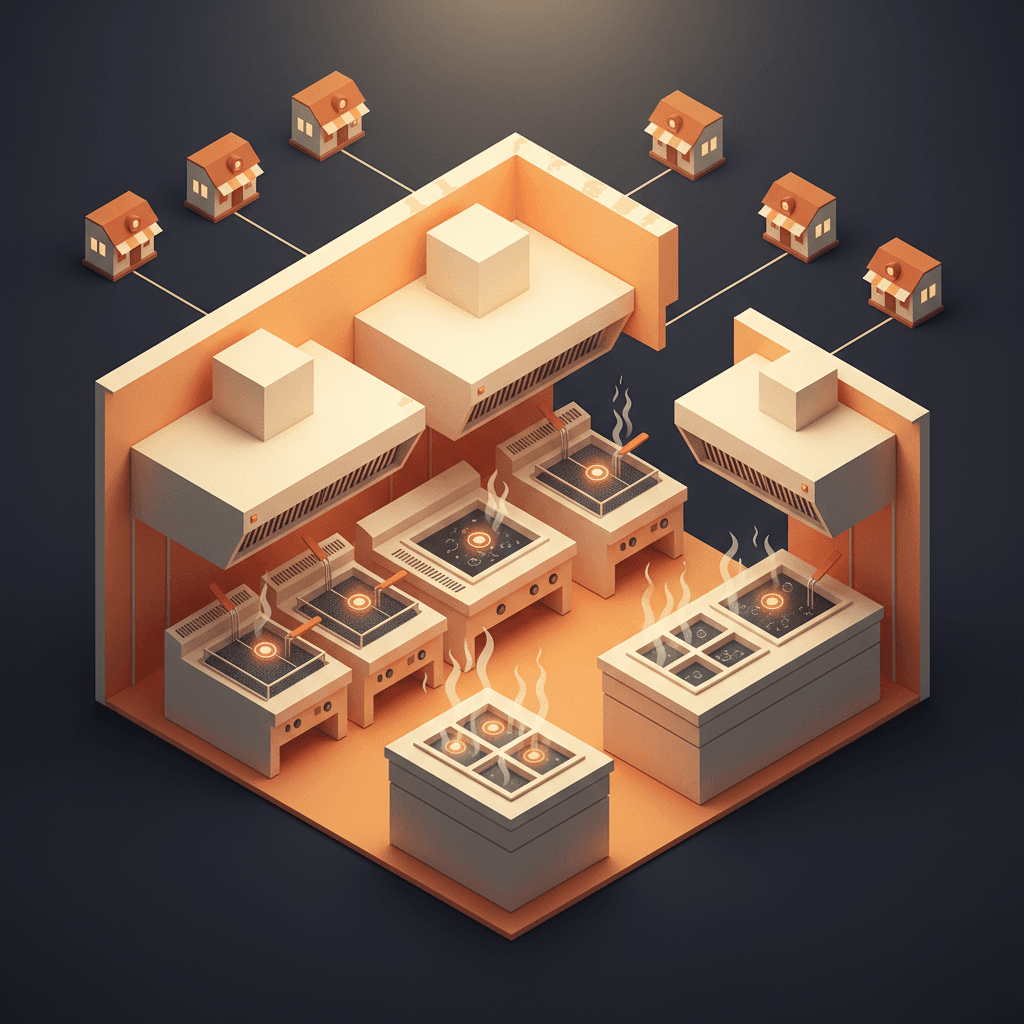
We incorporate AI and automated control in high-consumption industrial kitchens, analyzing equipment usage, thermal loads, ventilation, and water. The system optimizes schedules and operational parameters to reduce energy costs and increase operational efficiency.
01 — How it works
- 01
Equipment instrumentation
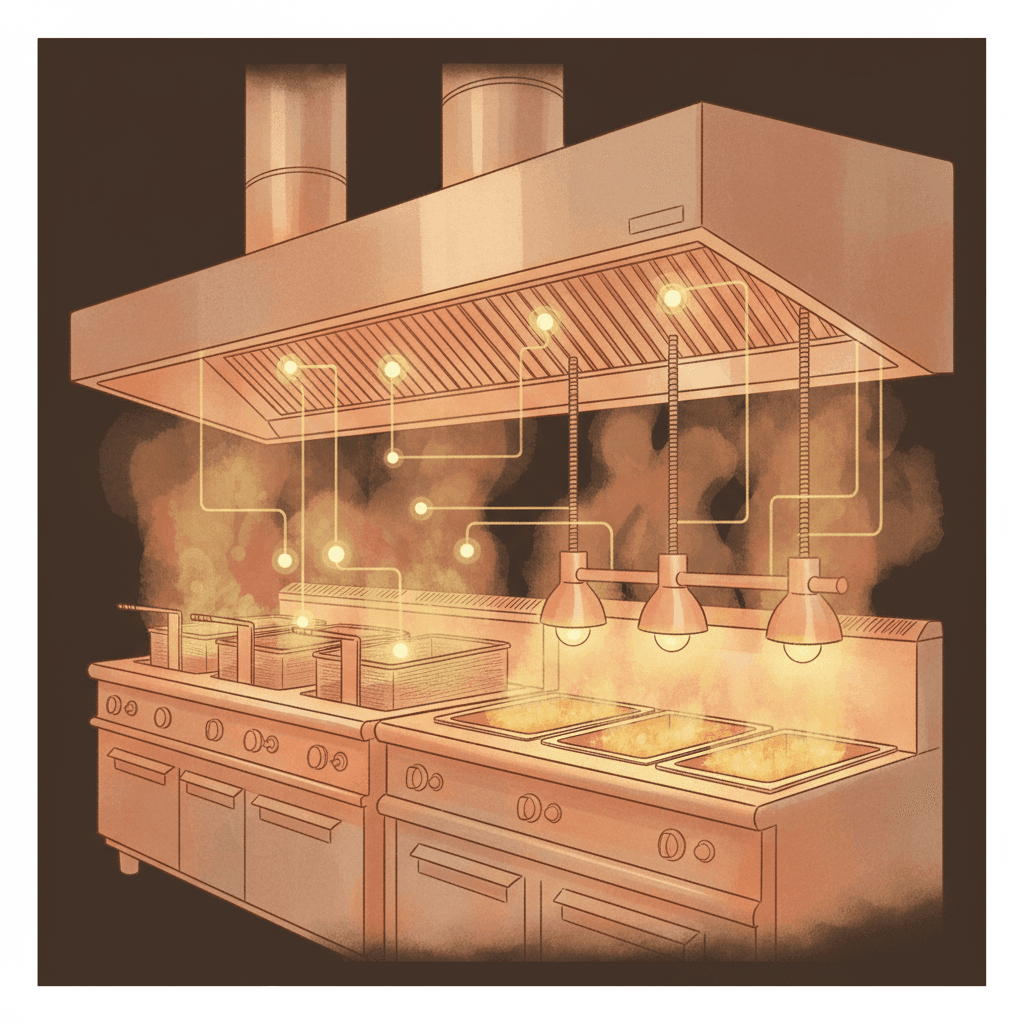
We connect temperature, water level, contactor status, and thermal relay sensors to critical kitchen equipment.
- 02
Schedule-based automation
The Phantom Shield gateway executes programmed on/off cycles, eliminating dependence on manual action by staff.
- 03
Centralized supervision
Reveal consolidates the status of all equipment across multiple locations, with alerts for deviations.
- 04
Continuous optimization
Electrical consumption data per location enables identifying savings opportunities and adjusting operational parameters.
02 — What it detects
Out-of-range bain-marie temperature
Deviations indicating malfunction or lack of maintenance, with risk of affecting service quality.
Low water level
A condition preceding dry operation and equipment damage, detectable before the operator notices.
Thermal overload in extractors
Thermal relay activation anticipating mechanical or electrical motor failure in the extractor.
Operational schedule non-compliance
Difference between the defined schedule and actual equipment status, indicating unresolved dependence on manual action.
03 — Results
Energy consumption reduction
Schedule automation and parameter control eliminate waste from equipment left on outside operating hours.
Reduced exposure to critical failures
Early detection of thermal overload and dry operation reduces corrective maintenance costs.
Centralized multi-site management
Monitoring and control of multiple locations from a single platform, without on-site visits.
Greater operational continuity
Automation and continuous monitoring reduce unplanned interruptions in kitchen operations.