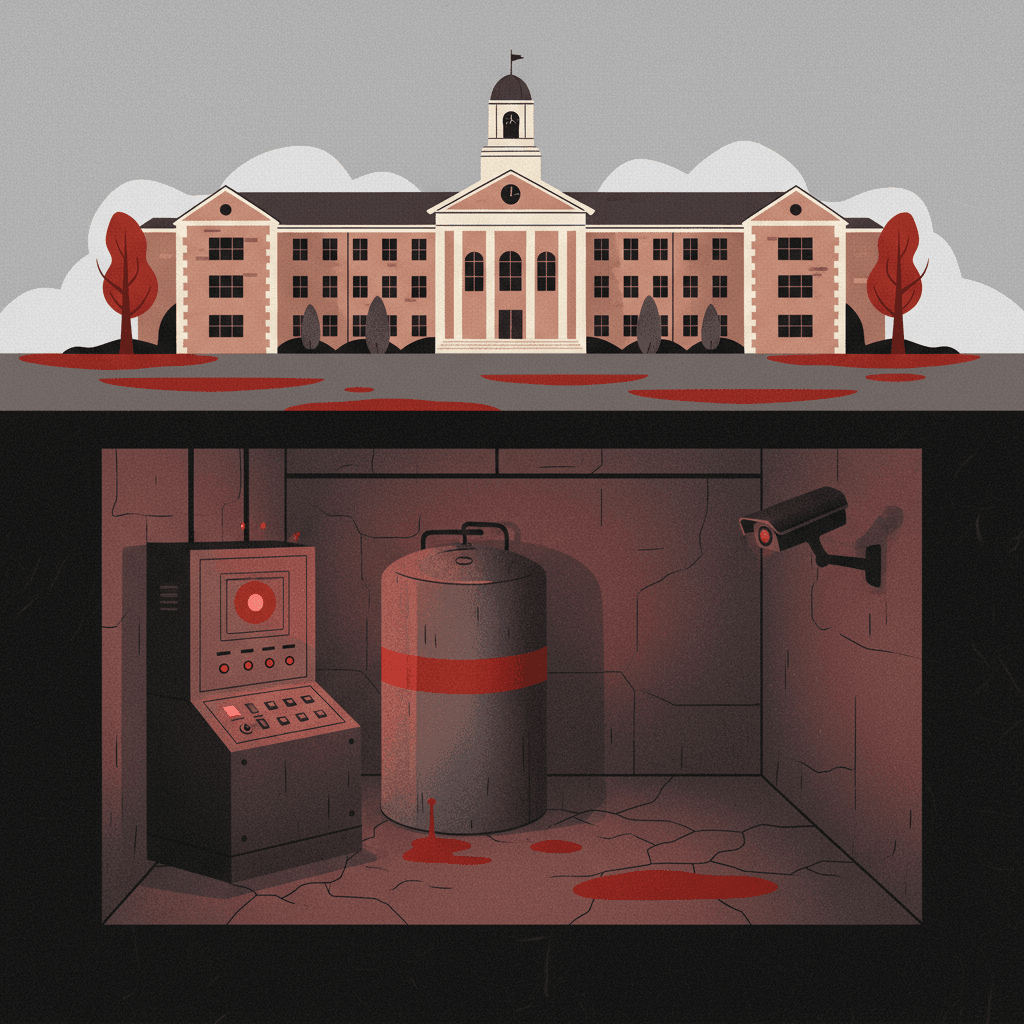
Remote supervision of confined spaces with multiple risks in critical institutional infrastructure
How an educational institution went from periodic on-site inspections to remote, continuous supervision of a confined space housing fire suppression systems, a fuel tank, and restricted access areas.
- Location
- Colombia
- Scale
- 1 site, 6 primary connections, 1 critical confined space
- Assets
- Fire panel, flood sensor, fuel sensor, camera, motion sensor
- Gateway
- Phantom Shield L0 (RF)
Summary
An educational institution with a high-criticality confined space — housing the fire suppression panel, jockey pump, a fuel tank, and critical equipment — relied on on-site inspections to supervise an area with simultaneous fire, flood, and intrusion risks. Reveal centralized remote supervision of all the confined space's systems, enabled automatic alerts for each type of risk, and eliminated the need for constant physical presence to verify the status of critical infrastructure.
01 — The problem
A private educational institution had a confined space — bunker-type — that concentrated critical fire protection systems, fuel storage, and essential equipment for operations. This space, with restricted access and multiple simultaneous risks, relied on on-site inspections by technical staff to verify that everything was functioning correctly. The lack of remote and continuous supervision meant that any anomaly — fire, flood, intrusion, or fuel leak — would only be detected during the next inspection round or when it had already generated impact.
This dynamic created several concrete operational frictions:
The confined space lacked remote or continuous supervision. Technical staff had to physically enter the bunker to verify the status of the fire panel, jockey pump, and fuel tank, exposing themselves to the area's inherent risks.
There were no automatic alerts for critical events. A fire system activation, an incipient flood, or an abnormal variation in fuel level could go unnoticed until the damage had already occurred.
The bunker lacked video surveillance or presence detection, preventing identification of unauthorized access to an area where intrusion represents a serious security risk.
The fuel tank's level, temperature, and volume were verified manually, making supply planning difficult and delaying early detection of losses or leaks.
02 — The operational signal
State change or failure in the fire suppression panel
any anomaly in the fire panel — zone activation, circuit failure, jockey pump issue — indicates a condition requiring immediate verification, whether it's an actual fire or a protection system failure.
Water presence in the confined space
water detection in an underground or semi-underground bunker anticipates a flood that can damage critical equipment, compromise the electrical system, and create risk for anyone entering the area.
Atypical fuel level drop
a level drop that does not correspond to the normal consumption pattern may indicate a leak, unauthorized drainage, or a containment system failure, with environmental and operational risk.
Temperature variation in the fuel tank
an abnormal temperature increase in the tank may signal a thermal risk condition that, in a confined space with multiple potential ignition sources, requires immediate attention.
Motion detection in restricted area
any human presence in the bunker outside authorized schedules or protocols represents a security risk that must be verified immediately.
Scene change or smoke detection by camera
video analytics detecting visible smoke or abrupt scene changes can anticipate a fire or dangerous environmental condition inside the confined space.
03 — How Reveal detects and analyzes it
Reveal centralizes information from all sensors and systems installed in the confined space, monitors each critical variable continuously, detects relevant events, and records historical traceability to identify conditions requiring intervention, all without the need for physical presence in the area.
In this case, the platform:
Supervises the fire suppression panel and jockey pump status, detecting activations, circuit failures, and operational anomalies that compromise protection capability.
Receives alerts from the water detector installed in the confined space, identifying incipient flood conditions before they affect critical equipment.
Monitors fuel tank level, temperature, and volume continuously, comparing readings against expected consumption patterns to detect deviations.
Streams live video from the bunker camera with scene change analytics and smoke detection, providing remote visual verification for any alert.
Records motion detection events in the restricted area, alerting the security team to unauthorized presence.
Connects all sensors to the gateway via radio frequency, ensuring reliable communication even in a confined space where conventional connectivity may be limited.
04 — What decision it enables
- Reveal's value in this context is not in remotely monitoring a bunker. It is in enabling critical safety decisions that previously could only be made after an on-site inspection. With this implementation, the team can:
- Activate the fire emergency protocol immediately when the fire panel reports an activation or the camera detects smoke, without waiting for someone to enter the bunker to verify.
- Evacuate or restrict access to the area upon flood detection, protecting both personnel and critical equipment before water reaches damaging levels.
- Schedule fuel replenishment based on actual level and consumption data, instead of estimates or periodic manual checks.
- Remotely investigate a motion alert in the restricted area, verifying through live video whether it is authorized access or an intrusion before sending personnel.
- Escalate to maintenance when the fire panel reports an operational failure, ensuring the protection system is always functional.
- Detect fuel leaks or losses from atypical level drops, avoiding environmental risk and economic loss.
05 — What it improves
Operational result
Elimination of routine on-site inspections
technical staff no longer need to enter the confined space to verify system status. Supervision is remote and continuous, reducing personnel exposure to the area's risks.
Immediate response to critical events
automatic alerts for fire, flood, intrusion, or fuel anomalies enable emergency protocol activation at the precise moment, without delay.
Remote visual verification
live video streaming with analytics allows confirming or ruling out alerts remotely, avoiding unnecessary mobilizations to the confined area.
Fuel traceability
continuous recording of level, temperature, and volume enables supply planning with real data and detection of losses or atypical consumption.
Greater access traceability
each motion detection event is recorded with a timestamp, providing documented evidence of who accesses the area and when.
Business result
Lower risk for personnel
reducing physical entries to the confined space decreases the technical team's exposure to the area's simultaneous risks, aligning operations with occupational safety best practices.
Critical infrastructure protection
early detection of fire, flood, or protection system failure reduces the probability of major damage to equipment essential for the institution's operational continuity.
Greater compliance with safety protocols
complete traceability of events, access, and confined space conditions provides documented evidence for audits, insurance, and regulatory requirements.
Better fuel supply planning
historical level and consumption data enables anticipating replenishment needs and avoiding shortage or waste situations.