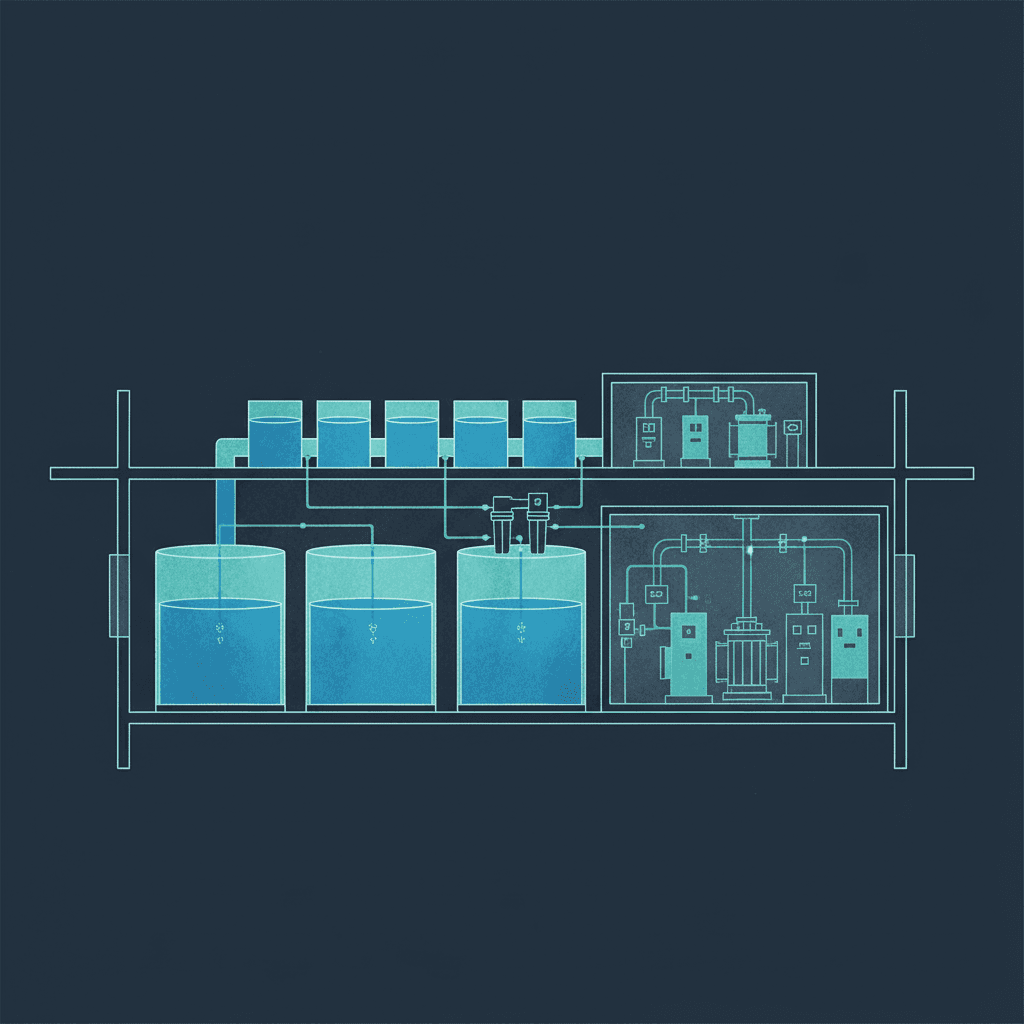
Preventive water level control and electrical supervision in critical shopping center infrastructure
How a large-format shopping center's operation went from periodic manual inspections to proactive, centralized management of water tanks, stormwater systems, and substation electrical variables.
- Location
- Bogota, Colombia
- Scale
- 1 site, 10 primary connections
- Assets
- Water tanks, level sensors, electrical meters
- Gateway
- Phantom Shield L0 (x3)
Summary
A large-format shopping center with complex water and electrical infrastructure relied on on-site inspections to supervise its water tank levels and substation electrical behavior. Reveal centralized the supervision of 4 tanks and the substation's electrical variables, enabled automatic alerts for critical level conditions, and allowed the technical team to shift from reactive management to preventive intervention on the building's most sensitive infrastructure.
01 — The problem
A large-format shopping center operation — which includes a main commercial building and a business tower — relied on periodic on-site inspections to verify the status of its water and electrical infrastructure. The technical team had no way to know the status of tanks or the substation without physically traveling there, delaying anomaly detection and increasing exposure to critical incidents.
This dynamic created several concrete operational frictions:
The 4 water tanks — 2 for stormwater and 2 supplying the shopping center and business tower — lacked continuous or centralized level monitoring. Status was only known through on-site visual inspection.
There were no automatic alerts for critical water levels, exposing the operation to risks of overflow in stormwater tanks or shortage in the main tanks, with no margin for anticipation.
Substation electrical variables were not monitored automatically. Power supply anomalies were only detected when they had already generated visible impact on operations.
The entire infrastructure management was reactive: the technical team conducted periodic on-site rounds, increasing operational costs and response times for situations requiring immediate attention.
02 — The operational signal
Sustained high level in stormwater tanks
when the level of a stormwater tank remains in the high zone without descending, it indicates the drainage or pumping system is not evacuating properly, anticipating a possible overflow.
Progressive level drop in main tanks
a gradual and sustained drop in water level in the shopping center or business tower tanks can indicate atypical consumption, a leak, or a problem in the replenishment system.
Pressure out of range in pressostatic sensors
deviations in tank pressure readings can signal an abnormal mechanical condition — closed valve, defective pump, or pipe restriction — before it translates into shortage.
Fluctuations or spikes in substation electrical variables
atypical behavior in voltage, current, or power factor can anticipate an overload, phase imbalance, or condition that compromises the building's electrical supply continuity.
Loss of communication with sensors or gateways
the interruption of signal from any of the 3 gateways or their associated sensors creates an operational blind spot that prevents detecting critical conditions in the affected zone.
03 — How Reveal detects and analyzes it
Reveal centralizes information from all the building's water and electrical assets, monitors critical variables continuously, detects relevant events, and records historical traceability to identify conditions requiring intervention.
In this case, the platform:
Receives continuous data from electromechanical high and low level sensors in the 2 stormwater tanks, detecting overflow or excessive drainage conditions.
Monitors pressure and level of the 4 main tanks through pressostatic sensors, comparing readings against defined operational ranges.
Supervises substation electrical variables through 4 dedicated meters, identifying deviations in the building's energy behavior.
Generates automatic alerts when it detects critical water levels, pressure deviations, or electrical anomalies, channeling the technical team's attention toward exceptions.
Records the history of all monitored variables, enabling trend analysis and water and electrical consumption patterns over time.
Operates through 3 Phantom Shield gateways that ensure coverage and redundancy in data transmission from all connected infrastructure.
04 — What decision it enables
- Reveal's value is not in showing water levels on a dashboard. It is in enabling concrete operational decisions for the technical team and building administration. With this implementation, the team can:
- Intervene preventively when a stormwater tank approaches maximum capacity, before an overflow with impact on facilities occurs.
- Activate water replenishment protocols when main tank levels show sustained decline, avoiding shortage in the shopping center or business tower.
- Escalate to maintenance when pressure readings indicate an abnormal mechanical condition in the water system, before it becomes a major failure.
- Identify electrical anomalies in the substation and make protection or load redistribution decisions before they affect building operations.
- Eliminate routine on-site inspection rounds of tanks and substation, concentrating the technical team exclusively on conditions requiring attention.
- Analyze historical water and electrical consumption patterns to plan preventive maintenance and optimize building operations.
05 — What it improves
Operational result
Reduced manual burden
on-site inspection rounds of tanks and substation are replaced by centralized, exception-based supervision, freeing up technical team time.
Greater visibility
administration and the maintenance team have continuous access to the status of all the building's water and electrical infrastructure from a single platform.
Faster response
automatic alerts for critical levels or electrical anomalies allow intervention before the condition escalates to an operational incident.
Greater traceability
the continuous history of levels, pressures, and electrical variables enables trend identification and maintenance needs anticipation.
Connectivity redundancy
the architecture with 3 gateways ensures that the loss of one connection point does not leave a critical building zone unsupervised.
Business result
Lower exposure to critical incidents
early detection of overflow or shortage conditions reduces the probability of damage to infrastructure, retail spaces, or common areas.
Greater operational continuity
continuous supervision of water and electrical supply reduces unplanned interruptions that affect the experience of visitors and tenants.
Better use of technical time
the maintenance team focuses on real conditions requiring attention, instead of distributing effort across routine inspections without findings.
Foundation for water and energy efficiency
historical water and electricity consumption data enables informed optimization decisions and operational cost reduction.